History of the Assyrian Empire: Unveiling the Legendary Power and Glory of Ancient Civilization
The Rise and Fall of the Assyrian Empire
This article explores the history of the Assyrian Empire, including its origins, major rulers, expansion, and eventual fall in 612 B.C.
The Assyrian Empire was one of the most powerful civilizations of the ancient Near East. Originating in northern Mesopotamia, the Assyrians built a vast empire that dominated much of the region for centuries. Their military strength, administrative organization, and monumental architecture made them one of the most influential powers of the ancient world.
Origins of the Assyrians
The Assyrians are a Semitic people which settled in the northern part of Mesopotamia in the third millennium B.C. The earliest inhabitants of Assur were subject to the Akkadian Empire and again to the kings of the Third Dynasty of Ur.
After the eclipse of the Third Dynasty of Ur a line of the Assyrian empire Kings held the throne successively as an independent sovereign Old Assyrian Kingdom. At that time the power of Babylon was on the up-swing and Hammurabi, who succeeded in overwhelming and destroying his rivals one by one, also gained control over Assyria.
The ensuing thousand years was full of oscillating tensions, with attacks and counter-attacks between the south and the north. At one time the south seized control of Assyria and at another the latter penetrated deep into the south.
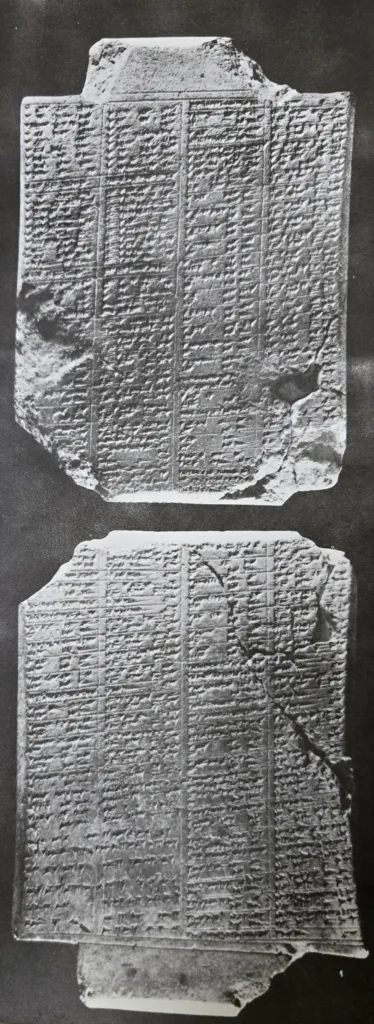
The Assyrians recorded the names and reigns of their kings. At the site of Khorsabad were found copies of the Assyrian King List which date from the time of Sargon (ca. 722-705 B.C.) and begin with the earliest rulers down to the reign of Sargon. Since the history of Assyria is one which is long and eventful.
Because Assyrian history spans many centuries, historians divide it into three main periods:
Old Assyrian Period
The Old Assyrian Period begins with the earliest phase of the Assyrian Empire history and carries through to the eclipse of the First Babylonian Dynasty. There is no evidence that Assur possessed any political structure during the third millennium B.C. but it was probably under direct Sumerian influence.
The great Assyrian King List which mentions the names of the first seventeen monarchs states that these kings ‘lived in tents’, i.e. led a nomadic life. Under Akkadian suzerainty the people of Assur cooperated in organizing overland trade and in spreading Mesopotamian civilization throughout the northern plains.
In the Gutian period, several Assyrian monarchs may have achieved local dominance, such as
|
Kikia |
Ushpia |
|
who built fortification walls around Assur |
who built a temple to the god Assur |
The names of such early monarchs are neither Semitic nor Sumerian but are possibly of Subarian origin, an ethnic stratum which inhabited northeastern Mesopotamia and with whom the Assyrians intermingled. Then, under the Third Dynasty of Ur, the Assyrians again fell under Sumerian influence.
The Assyrian empire vassal king Zariqum is known to have been contemporaneous with Amar-Sin, king of Ur (ca. 2045-2037 B.C.). After the fall of the Ur III empire, Assur regained its independence; and during the reign of its independence, and during the reign of its king Ilu-shuma, a contemporary of the founder of the First Dynasty of Babylon (Who must have reigned about 1894-1881 B.C.), it appears as a political and military power and is known to have raided deep into southern Mesopotamia.
In the time of Shamash-Adad (Samsi-Addu! 1815-1782 B.C.) the Old Assyrian Kingdom reached an unprecedented supremacy. He led his armies to domination over most of the cities in central Iraq and the Euphrates area, in particular Mari (modern Tell Hariri).
But towards the end of Shamshi-Adad’s reign, Hammurabi, King of Babylon, turned his ambitions towards the north and with the death of the Assyrian King, the Assyrians were forced to accept Babylonian rule.
Assur, capital city of the Old Assyrian Period, is situated on a bluff on the west bank of the Tigris, about 110 kilometers south of Mosul.
This, the oldest and most sacred of Assyrian cities, was thoroughly excavated by a German Expedition (Deutsche Orient-Gesellschaft) for twelve consecutive years from the beginning of the present century.
The excavators exposed its town plan with its temples, palaces and gates, and graves of the Assyrian kings, and found an incomparable wealth of objects from the Sumerian, Akkadian and Assyrian Periods.
Middle Assyrian Period (1365–912 B.C.)
The Middle Assyrian Period begins at about the time of the fall of the First Babylonian Kingdom and carries on through the Kassite rule in Babylon until the Beginning of the ninth century B.C. After Hammurabi died, Assyria remained under the Babylonian shadow until Babylon fell to the Hittites in the sixteenth century B.C. The Hittites, having plundered the city,
took its treasures and retreated to their uplands, and the Kassites, seizing the opportunity offered by the Hittite withdrawal, occupied Babylon and founded the Kassite Dynasty (on which see above). In the north, the kings of Assur gradually managed to assert Assyrian independence in the face of the Aramaean invasions from the west.
In Northern Mesopotamia the Assyrians had to overcome the powerful Mitannian kings, vassals of whom ruled in the Kirkuk area, over a kingdom composed of the mountain Hurrian population and from Anatolia the Hittite Empire exercised control over the Upper Euphrates and Khabur Rivers, quite apart from the aggressive ambitions of the Kassites towards the north.
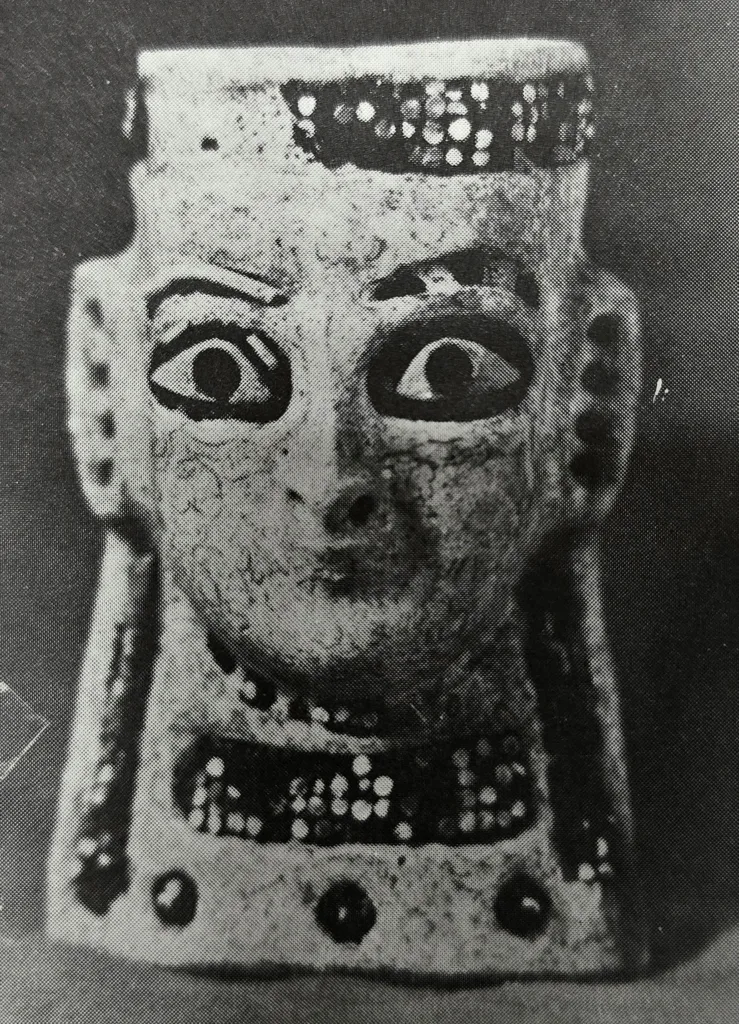
After centuries of political confusion and bitter conflict, Assyria won its position as a sovereign, independent nation. The Middle Assyrian Empire was effectively established under Assur-uballit.
Assur-uballit I
was the first king in the Middle Assyrian period to give Assyria the right to be called a significant power. He extended his domination to include the Mitanni Kingdom which he subdued in the mid-fourteenth century B.C. He engaged in friendly relations with the Hittites and with the Egyptian Pharaoh Amenophis IV (Akhnaton) and exercised influence over Babylon, whose Kassite king took his daughter in marriage.
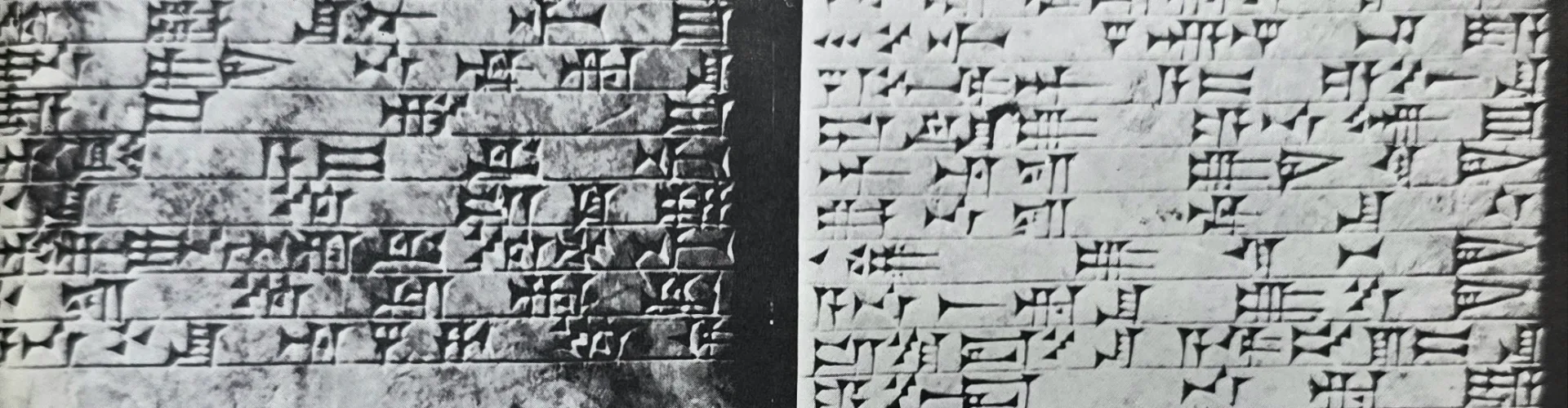
Shalmaneser I
was the greatest warrior of the dynasty. During his reign the Assyrian Kingdom expanded into the mountains in the east and to west and south. His name is associated with the foundation of new city Calah (Kalhu), modern Nimrud, 35 kilometres south of Mosul. Shalmaneser I was succeeded by his son:
Tukulti-Ninurta I
who fought the Kassites and occupied Babylon, later, however, an internal revolt took place in Assyria in which he died ignominiously. A period of confusion and weakness then followed.
Towards the middle of the twelfth century B.C., the Elamites dealt the great blow to Babylon which resulted in the end to the Kassite Dynasty, Weakness and confusion was also felt in Assyria, although some skirmishes and small-scale incidents occurred between the Assyrians and Babylonian during the reign of Nebuchadnezzar I. After that an energetic Assyrian King, Tiglathpileser I came to power.
Tiglath-pileser I
was a powerful king who played a great part in leading Assyria to a new era of prominence. He expanded the eastern and northern frontiers, reaching the “lands of Nairi”, penetrating deep into Armenia and arriving at Lake Van. He then directed his attention westward and marched to the Phoenicia seaboard, where security was threatened by the movements of the Sea Peoples. Finally, he struck south and occupied Babylonia (Kar-Duniash) around 1100 B.C.
At its height, the Assyrian domain extended across much of the Near East, from the Arabian Gulf to the Mediterranean coasts. The cultural and political development of this period is illuminated by the historical inscriptions from the reign of this king. With his death, however, the zenith of the Middle Assyrian Period passed. Under his successors many of his territorial acquisitions were lost, and the kingdom once again fell into decline.
The growing invasions of Arameans during the eleventh and tenth centuries B.C. became a major cause of Assyrian weakness. They consolidated their power along the western borders of Assyria and established small kingdoms in Syria. This dark age continued until a new line of determined Assyrian rulers emerged, reorganizing the state and creating a more effective army that restored Assyrian strength.
Neo-Assyrian Empire
The first obstacle which the Neo-Assyrian kings had to surmount was the resistance of Aramaean tribes which had settled in territory close to the heartlands of Assyria itself. Gradually the Aramaeans were subjected and their kingdoms in North Mesopotamia and Syria were eventually annihilated, removing any possibility of counter-attack.
The Assyrian Kings also subjugated Babylon and controlled the mountainous areas to their north and the east. In order to keep a firm hold on the empire and to ensure the freedom of communications for their expanded trade, the Assyrian monarchs erected fortresses or garrison buildings in many strategic positions. Their annals were recorded on clay tablets or stone slabs, recounting in detail their military campaigns, hunting trips, and other achievements,
The Neo-Assyrian period, which came to an end with the fall of Nineveh (612 B.C.) comprises the First and Second Empires and between them a period of decline.
The Neo-Assyrian era is divided into two phases:
|
The First Neo-Assyrian Empire (912–745 B.C.) |
Second Neo-Assyrian Empire (745–612 B.C.) |
First Neo-Assyrian Empire (912–745 B.C.)
Adad-nirari II
The immediate task of this king was by internal reform to consolidate the military potential of Assyria.
This enabled him to wage a successful series of campaigns in which he subdued several neighbouring territories and entered into alliance with Babylon. From the time of Adad-nirari II the Assyrian recorded their annals year by year, using the limmu system of dating, by which they named the year after a different high official, usually beginning with the new king. We have continuous lists of these ‘eponyms’, which make possible a reliable dating of events in Assyrian history.
Adad-nirari’s successor on the throne was Tukulti-Ninurta II (891-884 B.C.), who continued his predecessor’s policies, displaying Assyria’s military power, and securing overland trade and military routes by building new fortresses. He was succeeded on the throne by his son, the famous king:
Assurnasirpal II
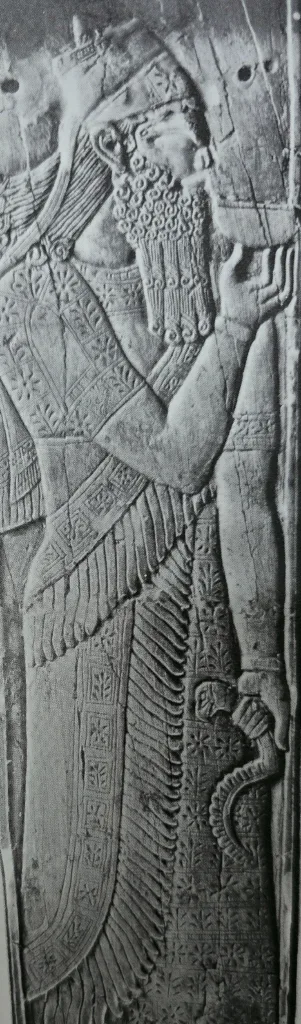
this illustrious ruler of Assyria carried his conquests into the northern and eastern mountains, and tightened his grip on the vassal states of the empire.
He fought the Aramaeans in the west, and brought all the land up to the Euphrates in Syria under his rule. His annals present him as a pitiless despot whose recorded atrocities make grim reading. He was however largely responsible for the army’s adoption of cavalry and instruments of siege warfare for the assault of fortified cities,
and he reorganised the provincial system whereby each province was governed by an Assyrian official appointed by the king and responsible to him.
Thus this fiercely destructive despot could be creative, and among his accomplishments is the rebuilding of the city of Kalhu (biblical Calah, modern Nimrud).
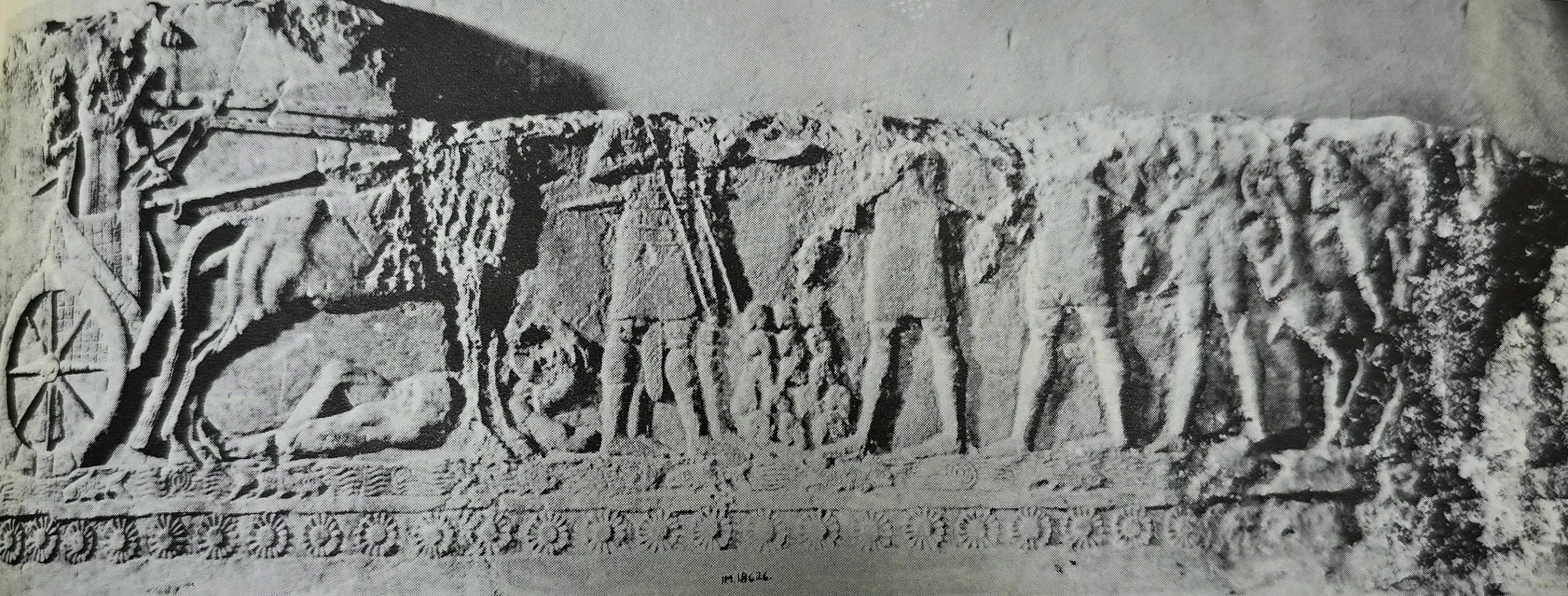
He constructed along the western side of the city a massive stone quay-wall on the Tigris, and for his own residence he built a magnificent palace, which is one of the most sumptuous monuments ever excavated in Iraq, with its frescoes and carved stone orthostats decorating the walls, depicting the achievements of the king in war or in the chase or the receipt of foreign tribute.
A British expedition unearthed a large number of carved stone bas-reliefs more than a hundred years ago,
and after World War II work was resumed by the British School of Archaeology, yielding important results
including the discovery of more stone bas-reliefs as well as a fine collection of ivories .
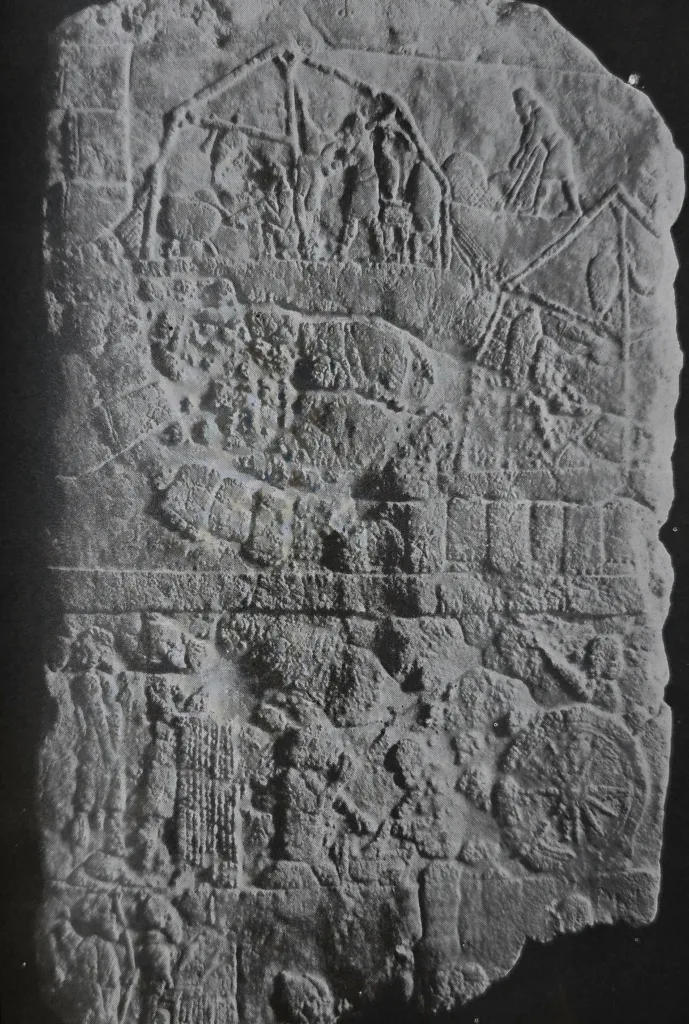
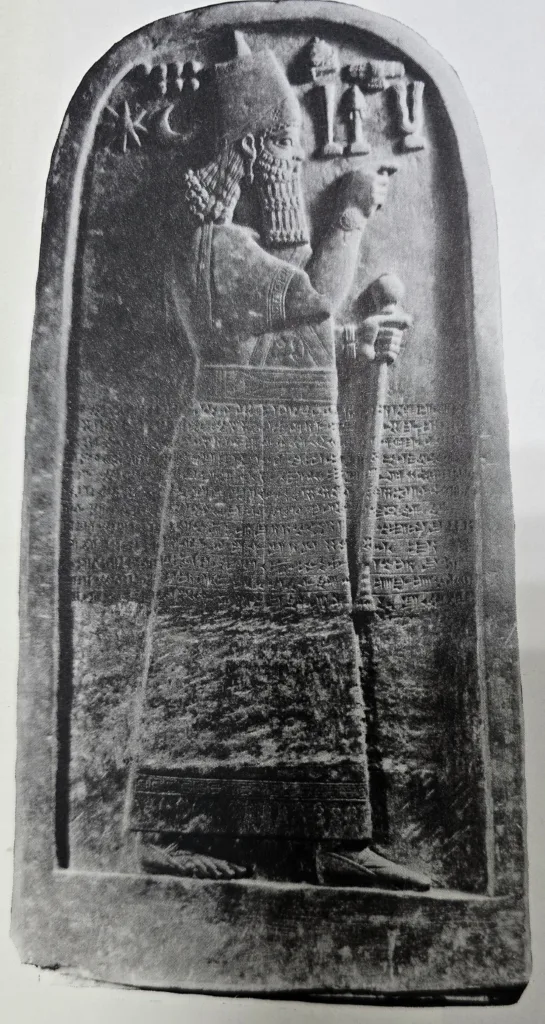
Also newly discoverd was a remarkable sandstone monument, inscribed front and back with an account of the work undertaken by the king during the first five years of his reign,
and describing the auspicious inauguration of the new palace of Assur-nasir-pal at Kalhu (Nimrud). This stele is now one of the exhibits of the Mosul Museum.
Shalmaneser III
was the son and successor of Assur-nasir-pal II, and he added to the far-flung domain which he had inherited from his father by annexing more foreign territories, his conquests reaching up as far as the sources of the Tigris and Euphrates. Virtually all of his 35-year reign was spent on the battlefield, His armies fought in Syria and Palestine, where they routed a coalition of the Jews and Aramaeans, penetrated into the uplands of Anatolia and northwestern Iran, and undertook punitive raids against the Arab tribes of the desert.
With the conquests of Shalmaneser there spread the influence of Assyrian culture and religion, and in particular the worship of the paramount god of Assyria, Assur, who represented the state of Assyria itself. Towards the end of his reign, one of his sons revolted, causing serious internal dissension, and as a result Shalmaneser gradually lost control of most of the territories he had won. The revolt was brought to an end by the triumph of Shamshi-Adad V over his rebellious brother, a victory which was achieved only with the assistance of his father’s old ally, the king of Babylon Marduk-zakir-shumi. It may be from this time that the popularity of the Babylonian god Nabu in Assyria should be traced.
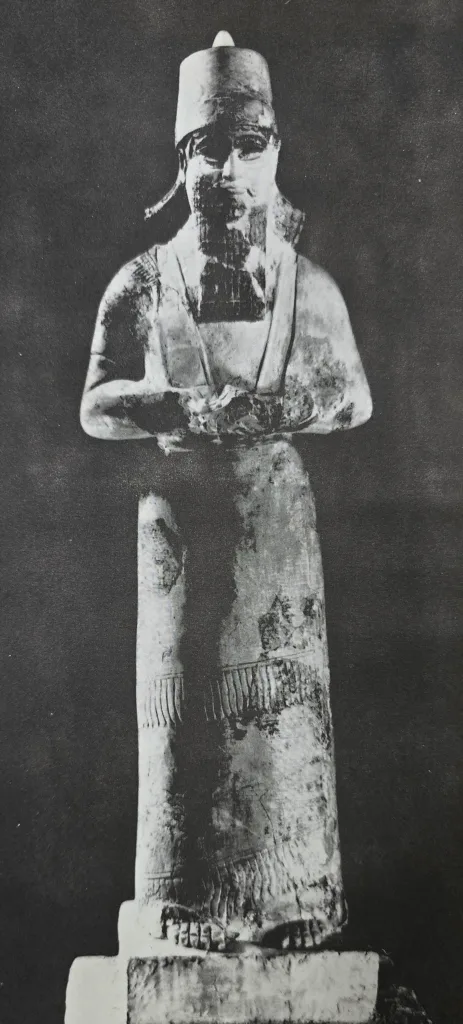
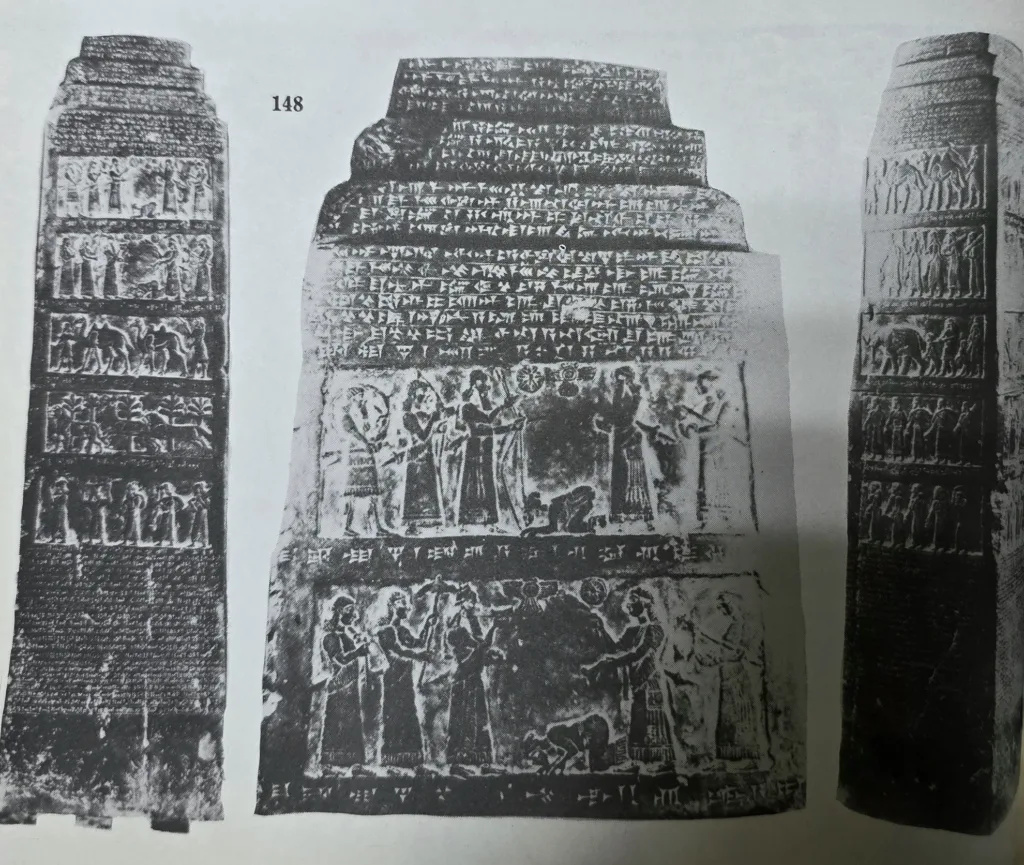
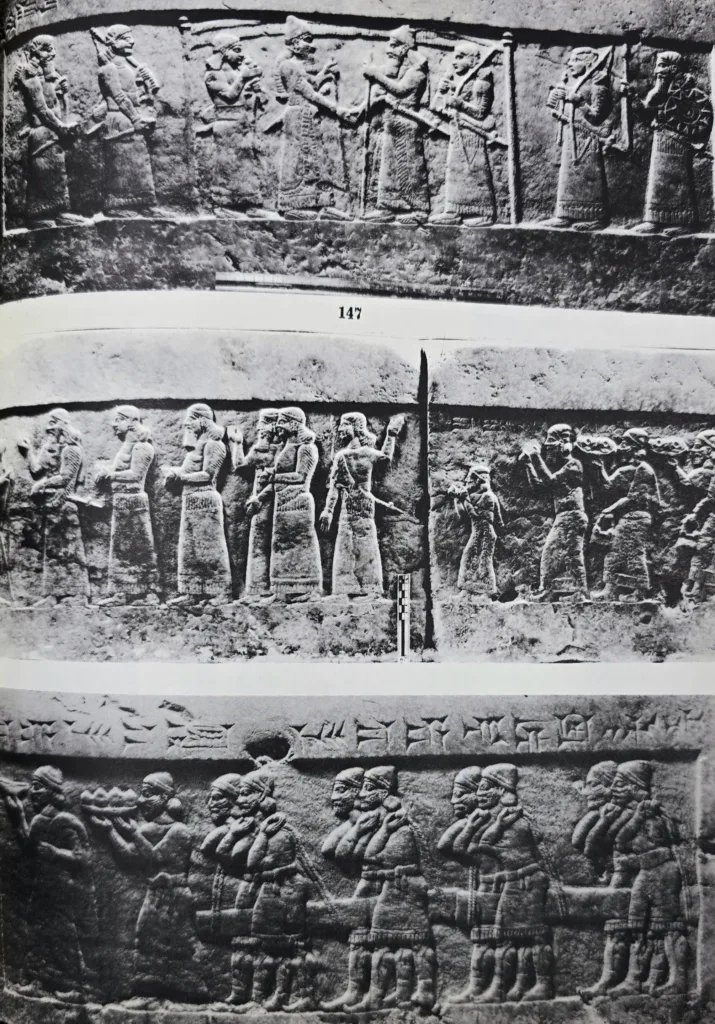
one of the famous monuments, the ‘Black Obelisk’ (a monolith of black alabaster now in the British Museum)
bears a long inscription recounting the king’s campaigns. (A gypsum cast of this monument is exhibited in Hall XII of the Iraq Museum).
Adad-Nirari III
was very young when his father Shamshi-Adad V died, and his mother Sammuramat, the legendary Semiramis whose fame survived to be retold in various stories of the Greek authors, acted as regent for her son until he reached maturity and was able to shoulder the burden of empire. He displayed the qualities of a strong and enterprising king.
After him his son Shalmaneser IV assumed power at Nimrud, and was in turn succeeded by Assur-dan II, whose reign was marked by an epidemic of plague, and by an eclipse of the sun that was later taken as a basis for computing the astronomical calendar, and which can be dated according to the estimates of astronomers to June 763 B.C. The position of Assyria was deteriorating, and the monarchy insecure.
This period of weakness was brought to a close by the accession of Tiglath-pileser III after a palace revolution at Nimrud, a vigorous sovereign who inaugurated the Second Neo-Assyrian Empire.
Second Neo-Assyrian Empire (745–612 B.C.)
Tiglath-pileser III
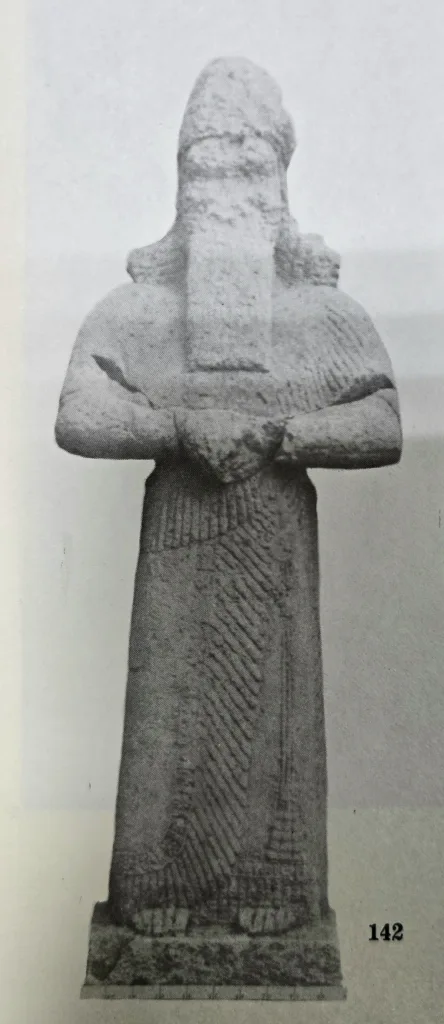
this king restored the fortunes of the Assyrian Empire and brought it to new heights of glory. An intelligent and understanding ruler, he made use of leniency and forbearance in his dealings with conquered lands. Once his authority was established, he marched southwards, fighting the Aramaean and Chaldaean tribes and the Elamites, and relieved Babylon from their menace. In the north he then challenged the might of Sarduris of Urartu, who had profited from Assyrian weakness to extend his dominions, and succeeded in defeating him.
The Aramaean states of Syria were next to receive his attention and after receiving the submission of Aleppo and Damascus he proceeded onwards into Palestine and down the Mediterranean coast as far as the borders of Egypt. In a second campaign against Babylonia he penetrated deep into the south of the country, and took the opportunity to subdue the tribes of Bit-Yakin and the Arab chiefs of the desert.
Like other Assyrian kings, Tiglath-pileser adopted the policy of deportation, transferring masses of people from one conquered territory to another, and so creating from mixed communities new populations with common language and traditions. Large groups of the inhabitants of Syria and Palestine were resettled in Babylonia and Assyria, and Babylonians were transplanted northwards and southwards.
After the death of Tiglath-pileser III his son Shalmaneser V, who held the title of King of Babylon and Assyria, had to deal with a revolt by the King of Israel, Hosea. He besieged Samaria for three years, but died before completing the task.
Sargon II
His successor Sargon II (722–705 B.C.) captured Samaria and ended the Kingdom of Israel in 721 B.C. He also founded a newreigned for seventeen years, and had to spend as much of his time stamping out rebellion and regaining territories held before, as he did in making new conquests. His first undertaking was to continue with his predecessor’s campaign against Samaria, which he captured, bringing to an end the Kingdom of Israel (721 B.C.). Then he took swift action to defeat a coalition of Syrian and Palestinian cities, and was able to win control over the rich maritime cities of Phoenicia.
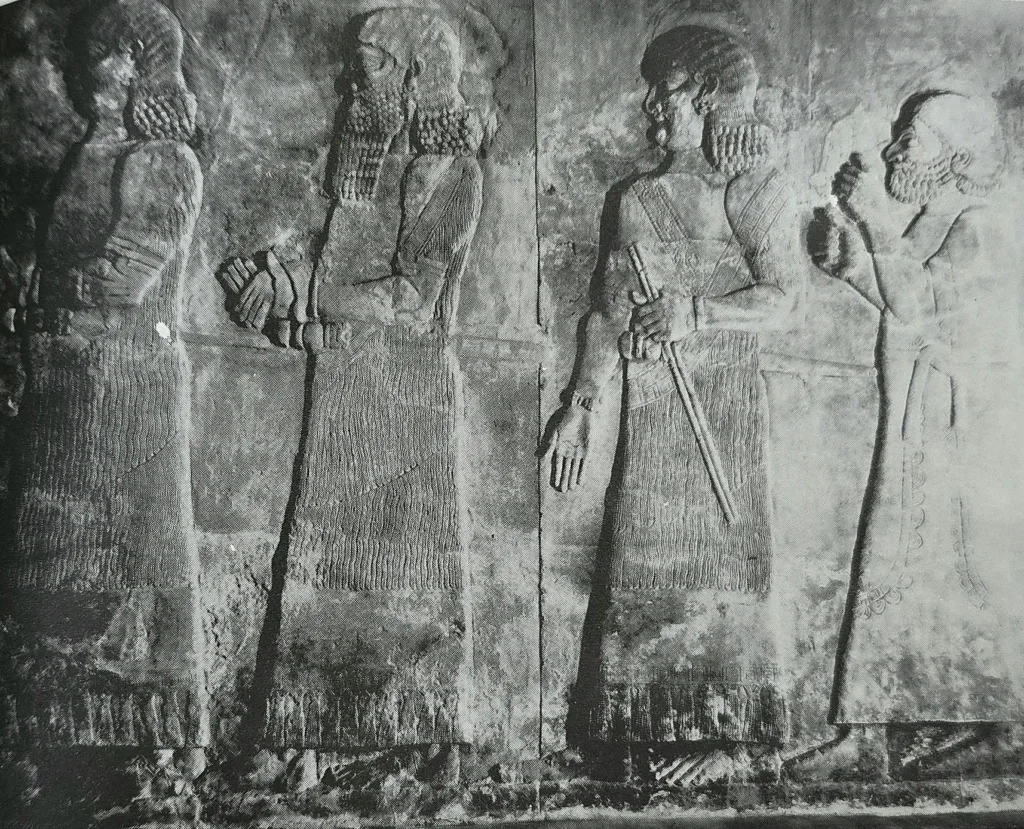
However in the south of Iraq he was confronted by a revolt of the Chaldaean ruler Merodach-baladan, from the Bit-Yakin tribe near the Arab Gulf, who enlisted the support of the Elamites in his defiance of Assyrian authority, and was able to take over Babylon and most of the southern cities. Sargon’s first punitive expedition dispatched against the rebel was defeated, and Merodach-baladan held power in Babylonia for some ten years.
However, Sargon after this rebuff turned his attention to the north, where he strengthened his hold, and routed a new coalition of Aramaean and Syrian states which was backed by the Egyptian pharaoh.
He was then able to seek vengeance against Merodach-baladan, for his earlier defeat, and organised a successful campaign in which Babylon was captured, and Merodach-baladan who was deserted by his Elamite allies, was obliged to take refuge in the marshes in the south (709 B.C.). However, the Assyrians pursued him down into his kingdom of Bit-Yakin, which they overran; Sargon then forgave Merodach-baladan, and installed him as a vassal ruler of the south.
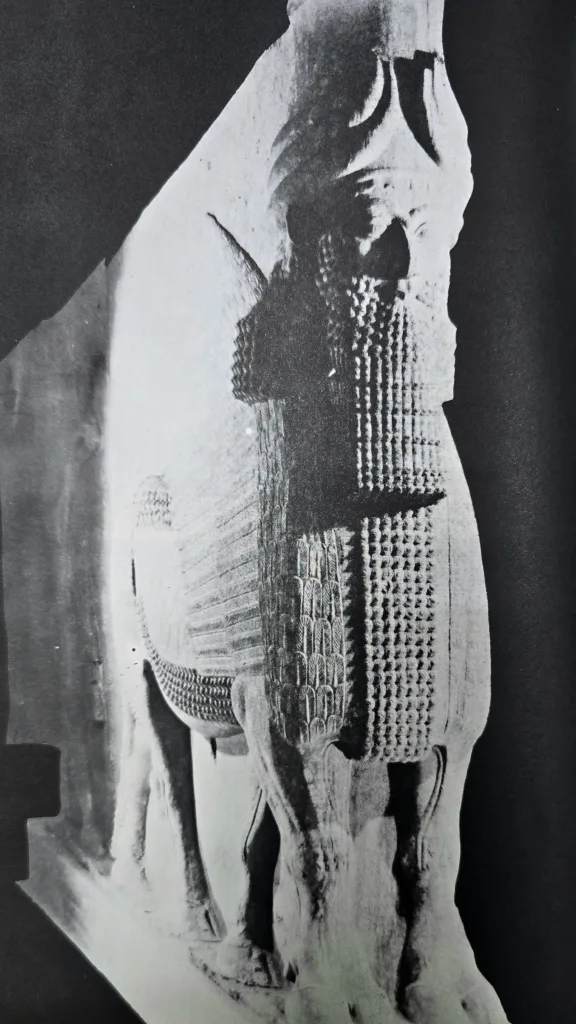
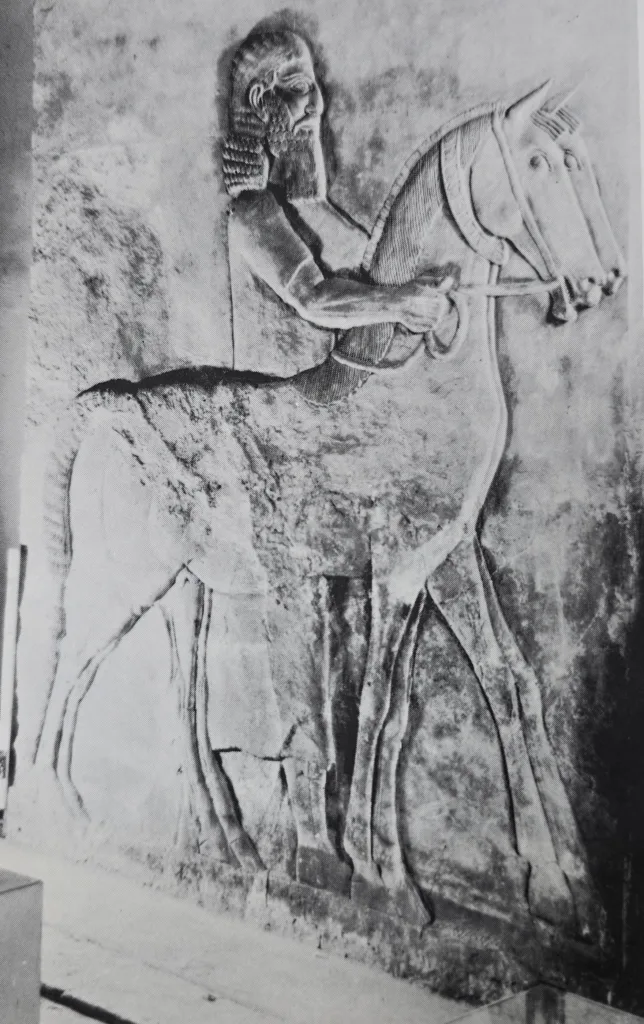
Although Sargon, in the true tradition of Assyrian kings, maintained the supremacy of the god Assur and saw to the restoration of his temple, his most remarkable building achievement was the creation of a new capital for himself at Dur-Sharrukin, which is represented by the ruins of Khorsabad (probaby for Chosroe Abad), a village some 18 kms.
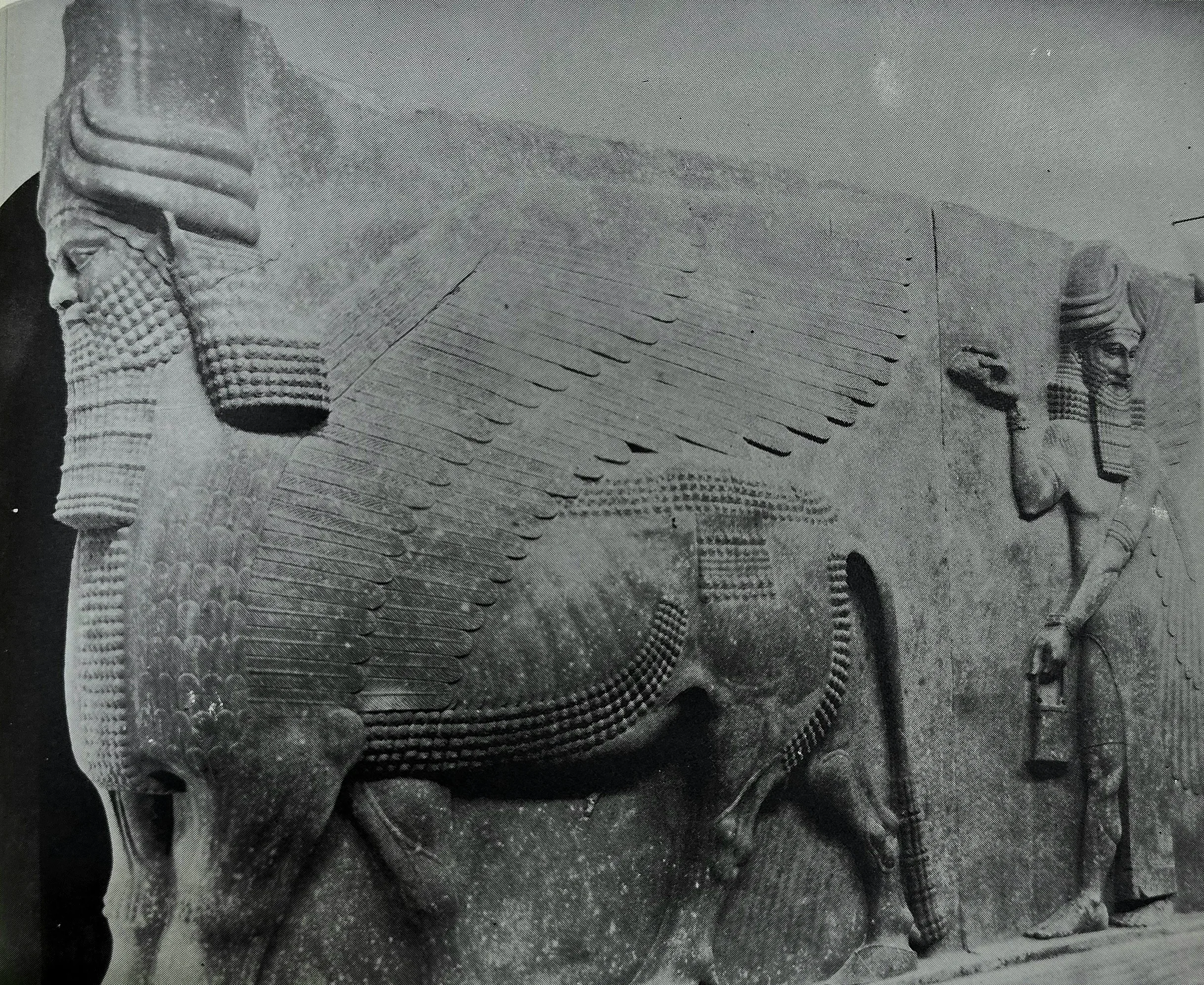
north east of Nineveh. The city gates and royal palace were adorned with frescoes and their walls lined with sculptured orthostats, while the traditional enormous stone figures with human heads and the bodies of bulls stood guard at the gates. Many of these reliefs and colossal bulls .
Sadly, however, Sargon did not live to enjoy his new capital, since no more than a year after he had transferred to the completed city, he was slain in batle with the Cimmerian tribes which were sweeping across Anatolia from east to west.
Sennacherib
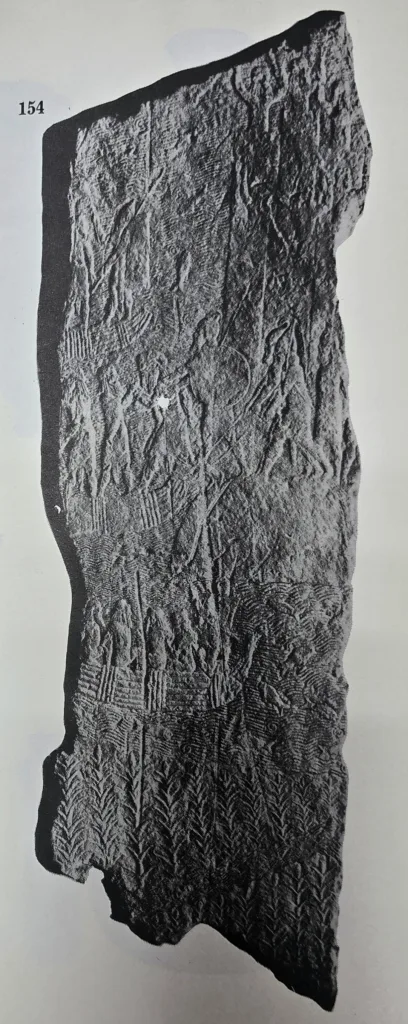
the son and successor of Sargon, did not choose to continue to reside in his father’s new capital and palace, but selected the ancient city of Nineveh as his capital, enlarged it, embellished its buildings, and provided artificial irrigation for its surrounding fields and gardens, to make it into a sort of paradise on earth.
Sennacherib was a bold statesman and strong ruler, who is perhaps best remembered for his ruthless measures in dealing with his enemies. When Babylon revolted against him under Merodach-baladan, he sent a strong campaign into Babylonia which won a fierce battle and caused Merodach-baladan to flee, leaving the throne of Babylon vacant for a nominee of Sennacherib who would be loyal to the Assyrian king.
Sennacherib then led successful expeditions into Asia Minor and the plains of Cilicia, and descended on to the Phoenician seaboard, storming the allied cities of Sidon, Tyre, and Ashkelon, thus recapturing all the cities which had previously been subject to Assyrian sovereignty. His army besieged Jerusalem in the reign of king Hezekiah, but was forced to withdraw because of a sudden illness which affected the troops.
Shortly after, Babylon once more revolted, probably as a result of the indignation of the priests and populace at Sennacherib’s treatment of the chief god of Babylon, Marduk, whom he had degraded, and at his conversion of Babylonia into a mere province of Assyria.
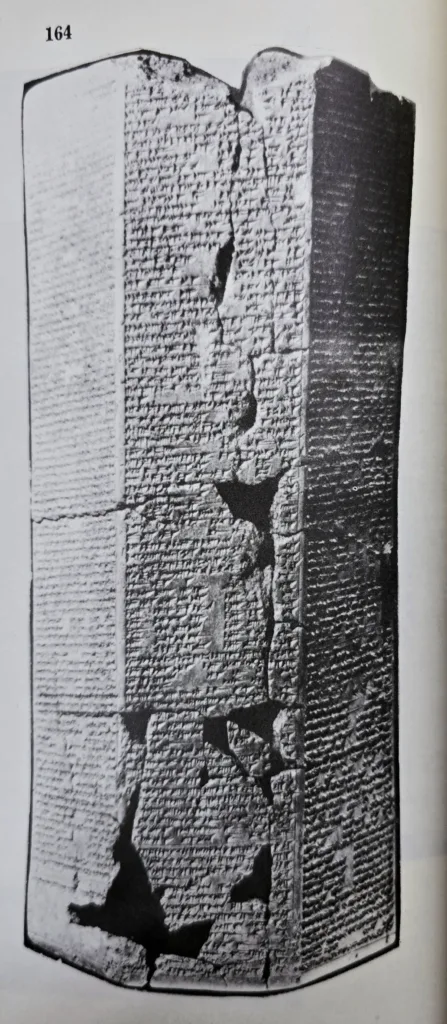
Sennacherib thereupon organised a massive punitive campaign against the insurgents, besieged and took Babylon, and installed on its throne one of his sons. Then, in order to settle the Babylonian problem once and for all, he determined to crush the states of the Sealand, which were the source of all the anti-Assyrian intrigues. He therefore ordered his Phoenician and Greek craftsmen to build a fleet of ships, and with these he sailed down the Euphrates, through the wide areas of swamp, to the Gulf, where he was able to ravage the Sealands.
However, in the meantime the Elamites, realising that Sennacherib was fully engaged in the south, seized the opportunity to invade central Mesopotamia, capturing Babylon and Sennacherib’s son. Initially, all Sennacherib could do after his prolonged campaigning in the south was to return to Nineveh and recuperate; but soon he assembled a great army and marched on Babylon, defeating his opponents. Then he exacted a terrible revenge on the city, burning it, and demolishing its temples, houses, and fortifications, and leading the Euphrates over the city to complete the work of destruction, which was long remembered for its savagery.
Although Sennacherib was a ruthless enemy, we must not forget that he undertook much constructive work at home. Besides his extensive building activities, especially at Nineveh but in other cities too, he dug canals and initiated other hydraulic schemes. Thus a great irrigation plan for the city of Nineveh involved the bringing of water from the River Gomel via the aqueduct of Jerwan, along canals whose banks might be reinforced with masonry.
Towards the end of his reign Sennacherib appointed his son Esarhaddon, whose mother was the Aramaean Naqiah, as crown prince, in defiance of the claims of his elder sons. As a result of this, one of his sons, with the assistance of a court faction, rose in revolt and murdered Sennacherib (681 B.C.).
Esarhaddon
when Sennacherib died Esarhaddon was in the north, campaigning in Armenia. From there he hastened towards Nineveh, quelled the rebellion, and entered the city in triumph. His policy towards Babylon was one of conciliation: he restored the city and its temples, and placed his elder son Shamash-shum-ukin on the throne of Babylon.
After putting down yet another revolt in southern Babylonia by the irrepressible Sealand Dynasty, he was able then to turn his attention elsewhere. In 676 B.C. he marched to the Syrian and Phoenician coast, receiving the submission of all the cities both inland and on the sea.
Gifts and tribute were brought to the Assyrian king from all these local rulers, and from further afield such as Cyprus and Cilicia. However the name of Esarhaddon is particularly associated with his daring invasion of Egypt. It seemed necessary to intimidate the Egyptian Pharaoh Taharqa, whose armies had often served as the backbone of resistance to Assyrian progress in Syria and Palestine
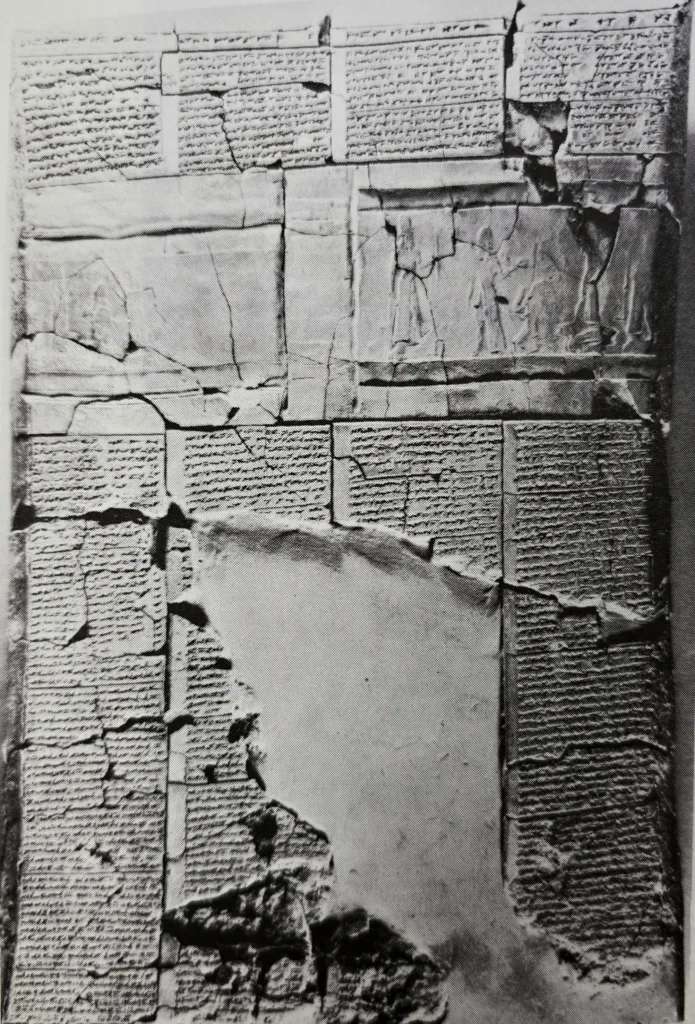
Marching southwards therefore, the Assyrian army attacked the Egyptian borders, defeating Taharqa and his army (673 B.C.). Two years later, after their return to Nineveh, a second offensive was planned, and after routing the Egyptian resistance from the Delta region, Memphis, the royal residence of Taharqa, was besieged and captured, and the Pharaoh fled to Upper Egypt, leaving the Assyrian armies to carry away countless spoil from Memphis, and an Assyrian garrison installed in the city. No doubt from this campaign come some Egyptian relics discovered by the Directorate-General of Antiquities during its excavations at Tell Nebi Yunus. On his triumphal march homeward Esarhaddon had his image carved on the rocks of the Dog River (Nahr-el-kelb) near Beirut, to commemorate his victories. During the reign of Esarhaddon we first hear of unrest in the northeast,
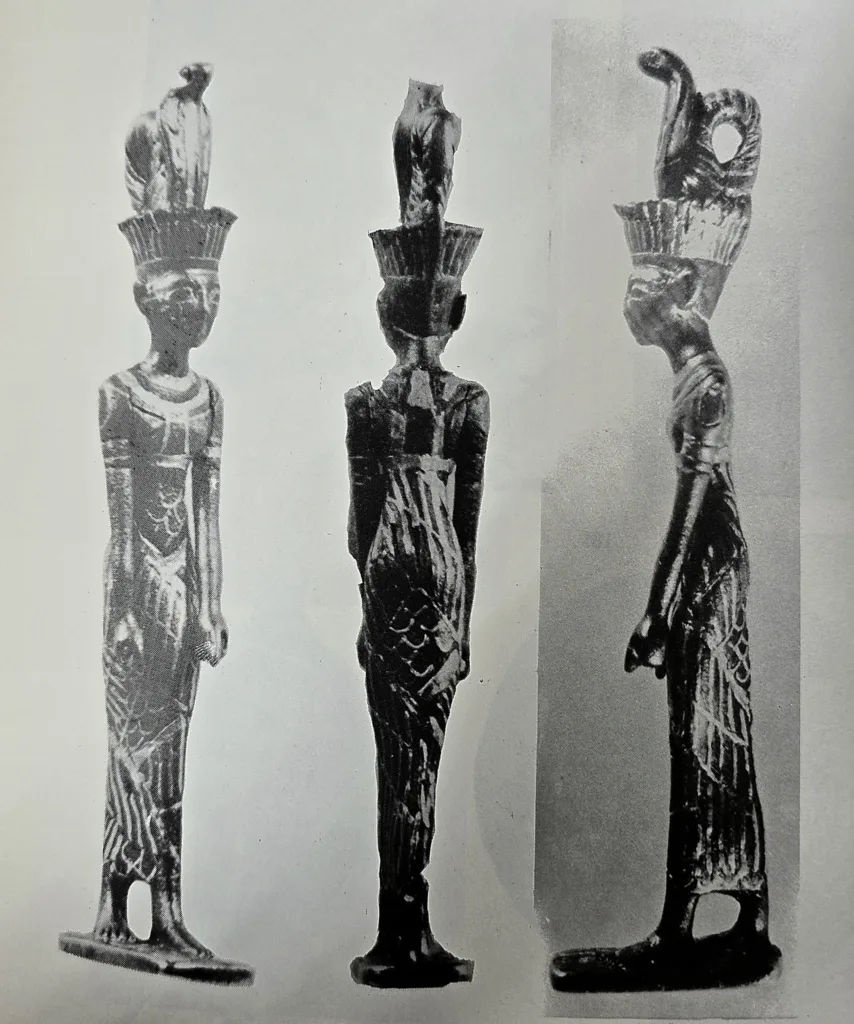
which foreshadows a much greater and finally fatal threat to Assyria in later years: we hear of waves of nomadic tribes moving across Asia Minor, and in the east, of the Medes, who were establishing themselves as a power in the great Iranian plateau.
Towards the end of his reign Esarhaddon proclaimed his son Assur-bani-pal the legitimate heir to the throne, and established another of his sons, Shamash-shum-ukin, as the king in Babylon but with allegiance to his brother the Assyrian king. It was in 669 B.C., when he was leading once again a campaign against Egypt, that Esarhaddon fell sick and died en route.
Ashurbanipal
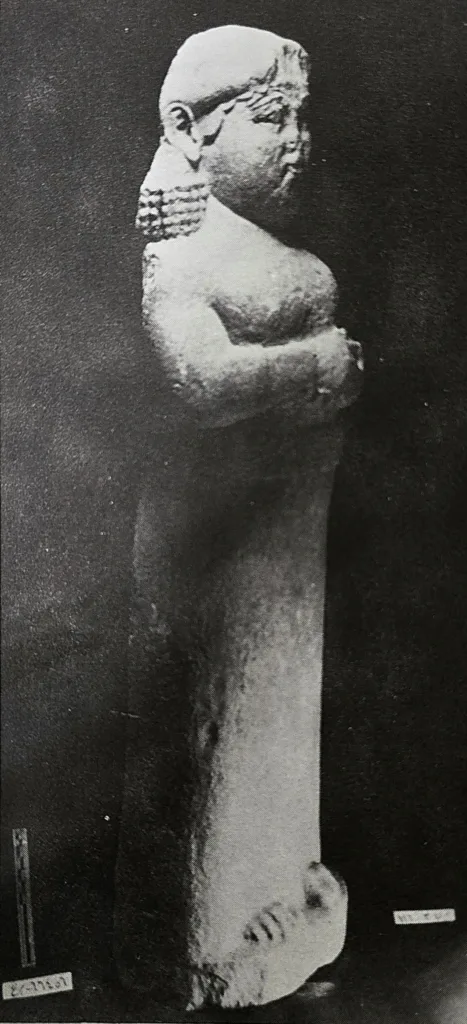
who succeeded his father, is perhaps justly most famed for his interest in literature and the fine arts. He created a great library at Nineveh, for which he collected, and had translated, all the Sumerian or Akkadian literary texts on which he could lay his hands. This is the library which was discovered at Nineveh.
Immediately after his accession, of course, Assur-bani-pal inherited the task of suppressing the Egyptian revolt, and he ordered the Commander-in-Chief, Sha-Nabu-shu, to resume his father’s campaign. The Assyrian army therefore took the road to Egypt, occupied the Delta, and routed the troops of Taharqa and other Egyptian princes. They then took Memphis, and pursued Taharqa to his capital in Upper Egypt, which they captured. Thus the whole country fell under Assyrian control, and Assur-bani-pal installed local rulers such as Psammetichus, concluding with them treaties which bound them to send tribute and observe their loyalty to Assyria.
After the Assyrian withdrawal from Egypt all provinces came under the control of Psammetichus, who founded the 26th Dynasty, which was loyal to the Assyrians.
As for Babylon, at the time of Assur-bani-pal’s accession, his brother took the throne of Babylon as their father had arranged, and for some 20 years they behaved as faithful brothers. However, in the end Shamash-shum-ukin was infected by the spirit of revolt in Babylonia, and in alliance with Elam declared war on his brother and overlord, the King of Assyria. Assur-bani-pal led a punitive campaign against his brother, laid siege to Babylon, and ravaged it by fire, Shamash-shum-ukin dying in the flames of his own palace.
At the same time, Assur-bani-pal proceeded southwards to punish the Aramaean and Arab tribes which had lent their support to the rebel, and subdued them after prolonged fighting. He then sent his troops against Elam, sacked the capital, Susa, plundered it, and even violated the graves of its kings. This left him undisputed ruler of the whole of the Near East.
Fall of Nineveh and the End of the Assyrian Empire
Assur-etelli-ilani (629-627 B.C.) After the death of Assur-bani-pal the succession was disputed, but after various intrigues his son Assur-etelli-ilani occupied the throne. He was probably young at the time of his accession, and was dependent on the help of the Commander-in-Chief, Sin-shum-lishir, in his efforts to suppress revolts both in the provinces and in Assyria itself. Many of the outlying provinces managed to cast off the Assyrian yoke entirely, Egypt, for example, becoming independent although it remained loyal to Assyria. The cities of the Mediterranean Coast and Syria severed their ties with Assyria also, and in Babylonia a Chaldaean prince called Nabopolassar founded an independent dynasty, uniting Babylonia under him and extending his authority over cities and districts which had been subject to Assyria.
At Nineveh, the domestic scene was not peaceful either. Sin-shum-lishir revolted against his master and attempted to rule Assyria himself, but he in his turn was ousted by Sin-shar-ishkun, who managed to keep his seat on the throne for some years, and in some measure restore Assyria’s waning fortunes.
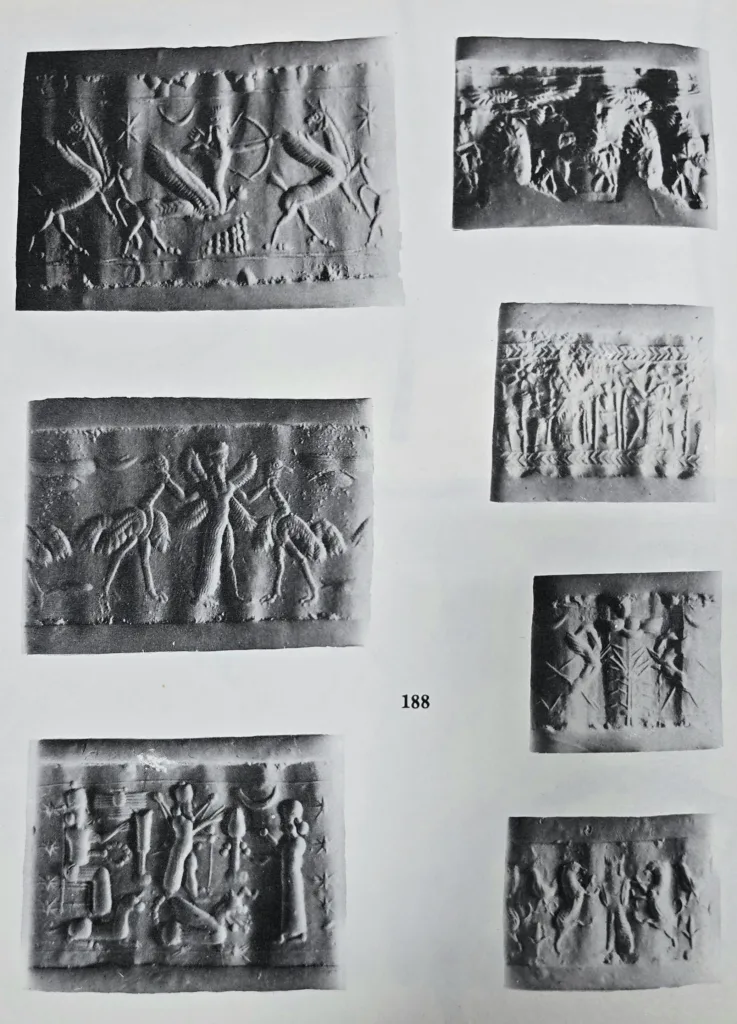
However, the internal dissension only served to accelerate the break-up of the Assyrian empire, and many of its territories fell away.
In the north, it is true, the Anatolian kingdoms and the distant Lydians kept up their allegiance to Assyria, but this was only as a counter-measure to the growing might of the Medes, who under their new king Cyaxares had become masters of northern Iran and engaged in conflict with the Assyrian state itself. In the end Assyria met its final blow from the alliance of Cyaxares the Mede and the Babylonian ruler Nabopolassar, who marched with their combined forces against Nineveh, besieged, and captured it after fierce fighting (612 B.C.).
After the fall of Nineveh, Cyaxares took the north-eastern part of the realm of Assyria, while Nabopolassar was assigned the south.
Meanwhile his son, Nebuchadnezzar, was sent to pursue the remnants of the Assyrian armies, which had fled under the king Assur-uballit II to the western Assyrian capital of Harran. Nebuchadnezzar in fact encountered little resistance from Assur-uballit, and in 609 B.C. Harran itself fell to him, and so marked the final downfall of the Assyrian Empire which had held sway by sheer force and terror over the whole of the Near East.
After this Nebuchadnezzar advanced westwards to the upper Euphrates, occupying Assyria’s one time possessions, and in 605 B.C. he met the Egyptian army under its Pharaoh Necho (son of Psammetichus) who had been allied with Assyria.
The Egyptians had marched up through Palestine and Syria, fighting as they went, and the Pharaoh stopped at the Dog River by Beirut to carve his figure in commemoration of his victories. Possibly as a result of this earlier fighting, however, the Egyptian army was no match for the Babylonians, and they suffered a grave defeat at Carchemish on the Euphrates, after which Necho was forced to retire to within his own borders.
Assyrian King Lists
Explore the complete list of the Assyrian empire kings from the Old, Middle, and Neo-Assyrian periods. This compilation includes each ruler’s name, reign, and dates, providing a clear historical overview of Assyria’s powerful dynasties.
| No. | Name | No. | Name |
|---|---|---|---|
| 1 | Tudiya | 15 | Azarah |
| 2 | Adamu | 16 | Ushpia |
| 3 | Yangi | 17 | Apiashal |
| 4 | Kitlamu | 18 | Hale |
| 5 | Harharu | 19 | Samanu |
| 6 | Mandaru | 20 | Hayanu |
| 7 | Imsu | 21 | Illu-Mer |
| 8 | Harsu | 22 | Yakmesi |
| 9 | Didanu | 23 | Yakmeni |
| 10 | Hanu | 24 | Yazkur-ilu |
| 11 | Zuabu | 25 | Ila-kabkabi |
| 12 | Nuabu | 26 | Aminu |
| 13 | Abazu | 27 | Sulili |
| 14 | Belu | 28 | Kikkia |
| No. | Name | Years | Date |
|---|---|---|---|
| 29 | Akia/Zariqum | 2000/1980 | |
| 30 | Puzur-Assur I | 1960 | |
| 31 | Shalim-ahum | 1940 | |
| 32 | Ilu-shuma | 1920 | |
| 33 | Erishum I | 1900 | |
| 34 | Ikunum | 1880 | |
| 35 | Sharru-ken (Sargon) I | 1860 | |
| 36 | Puzur-Assur II | 1840 | |
| 37 | Naram-Sin | 1820 | |
| 38 | Erishum II | 1815 | |
| 39 | Shamshi-Adad I | 33 | 1815-1782 |
| 40 | Ishme-Dagan I | 40 | 1781-1742 |
| 41 | Assur-dugul | 6 | 1741-1716 |
| 42 | Assur-apla-idi | ||
| 43 | Nasir-Sin | ||
| 44 | Sin-namir | ||
| 45 | Ipqi-Ishtar | ||
| 46 | Adad-salulu | ||
| 47 | Adasi | 1716-1687 | |
| 48 | Belu-bani | 10 | 1686-1677 |
| 49 | Libaya (Shabai) | 17 | 1676-1660 |
| 50 | Sharma-Adad I | 12 | 1659-1648 |
| 51 | Iptar-Sin (Gizil-Sin) | 12 | 1647-1636 |
| 52 | Bazayu (Zimza) | 28 | 1635-1608 |
| 53 | Lulayu (Lulla) | 6 | 1607-1602 |
| 54 | Kidin-Ninua (Shu-Ninua) | 14 | 1601-1588 |
| 55 | Sharma-Adad II | 3 | 1587-1585 |
| 56 | Erishum III | 13 | 1584-1572 |
| 57 | Shamshi-Adad II | 6 | 1571-1566 |
| 58 | Ishme-Dagan II | 16 | 1565-1550 |
| 59 | Shamshi-Adad III | 16 | 1549-1534 |
| 60 | Assur-nirari I | 26 | 1533-1508 |
| 61 | Puzur-Assur III | 14 | 1507-1484 |
| 62 | Enlil-nasir I | 13 | 1483-1471 |
| 63 | Nur-ili | 12 | 1470-1459 |
| 64 | Assur-shaduni | 1459 | |
| 65 | Assur-rabi | 12 | 1458-1439 |
| 66 | Assur-nadin-ahhe I | 13 | 1438-1429 |
| 67 | Enlil-nasir II | 6 | 1432-1427 |
| 68 | Assur-nirari II | 7 | 1426-1420 |
| 69 | Assur-bel-nisheshu | 9 | 1419-1411 |
| 70 | Assur-rim-nisheshu | 8 | 1410-1403 |
| 71 | Assur-nadin-ahhe II | 10 | 1402-1393 |
| 72 | Eribu-Adad I | 27 | 1392-1366 |
| No. | Name | Years | Date |
|---|---|---|---|
| 73 | Assur-uballit I | 36 | 1365-1330 |
| 74 | Enlil-nirari | 10 | 1329-1320 |
| 75 | Arik-din-ili | 12 | 1319-1308 |
| 76 | Adad-nirari I | 32 | 1307-1275 |
| 77 | Shalmaneser I | 30 | 1274-1245 |
| 78 | Tukulti-Ninurta I | 37 | 1244-1208 |
| 79 | Assur-nadin-apli | 3 | 1207-1204 |
| 80 | Assur-nirari III | 6 | 1203-1198 |
| 81 | Enlil-kudur-usur | 5 | 1197-1193 |
| 82 | Ninurta-apil-ekur | 13 | 1192-1180 |
| 83 | Assur-dan I | 46 | 1179-1134 |
| 84 | Ninurta-tukulti-Assur | 1 | 1133 |
| 85 | Mutakkil-Nusku | 1 | 1133 |
| 86 | Assur-resh-ishi I | 18 | 1133-1116 |
| 87 | Tiglath-pileser I | 39 | 1115-1077 |
| 88 | Ashared-apal-ekur | 2 | 1076-1075 |
| 89 | Assur-bel-kala | 18 | 1074-1057 |
| 90 | Eriba-Adad II | 2 | 1056-1055 |
| 91 | Shamshi-Adad IV | 4 | 1054-1051 |
| 92 | Assur-nasir-pal I | 19 | 1050-1030 |
| 93 | Shalmaneser II | 12 | 1029-1016 |
| 94 | Assur-nirari IV | 6 | 1015-1010 |
| 95 | Assur-rabi II | 41 | 1010-970 |
| 96 | Assur-resh-ishi II | 5 | 970-966 |
| 97 | Tiglath-pileser II | 32 | 966-935 |
| 98 | Assur-dan II | 23 | 935-912 |
1st Neo-Assyrian Empire
| No. | Name | Years | Date |
|---|---|---|---|
| 99 | Adad-nirari II | 21 | 912-891 |
| 100 | Tukulti-Ninurta II | 7 | 891-884 |
| 101 | Assur-nasir-pal II | 25 | 884-858 |
| 102 | Shalmaneser III | 35 | 858-824 |
| 103 | Shamshi-Adad V | 14 | 814-811 |
| 104 | Adad-nirari III | 28 | 811-781 |
| 105 | Shalmaneser IV | 10 | 781-772 |
| 106 | Assur-dan III | 18 | 772-754 |
| 107 | Assur-nirari V | 8 | 754-745 |
2nd Neo-Assyrian Empire
| No. | Name | Years | Date |
|---|---|---|---|
| 108 | Tiglath-pileser III | 19 | 745-727 |
| 109 | Shalmaneser V | 5 | 727-722 |
| 110 | Sargon II | 17 | 722-705 |
| 111 | Sennacherib | 24 | 705-681 |
| 112 | Esarhaddon | 12 | 681-669 |
| 113 | Assur-bani-pal | 43 | 669-629 |
| 114 | Assur-etelli-ilani | 3 | 629-627 |
| 115 | Sin-shumu-lishir | 627 | |
| 116 | Sin-sharru-ishkun | 9 | 627-612 |
| 117 | Assur-uballit | 6 | 612-609 |
If you’re captivated by the rich history of the Assyrian Empire, its legendary kings, and the breathtaking archaeological sites of Iraq, there’s no better time to explore than now. Immerse yourself in a journey through time, from ancient ruins to vibrant cities, and experience the stories that shaped civilization. Don’t just read about history live it.